09
AI Classroom
Insight
A Vision for Tomorrow’s Learning
This project, developed in collaboration with two classmates, presents a holistic concept for the classroom of the future. Together, we reimagined the entire educational experience – from spatial design to pedagogical strategy.
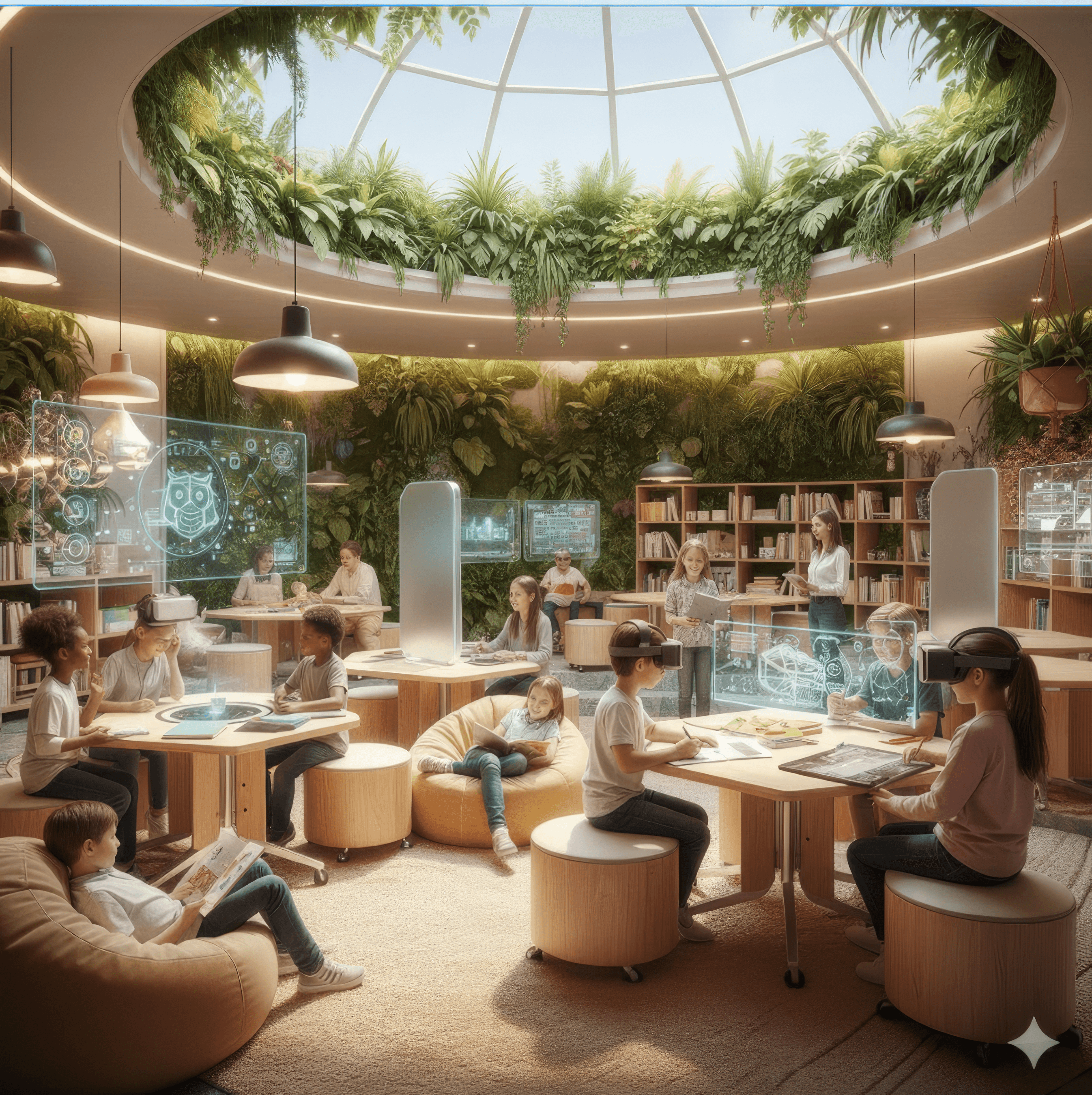
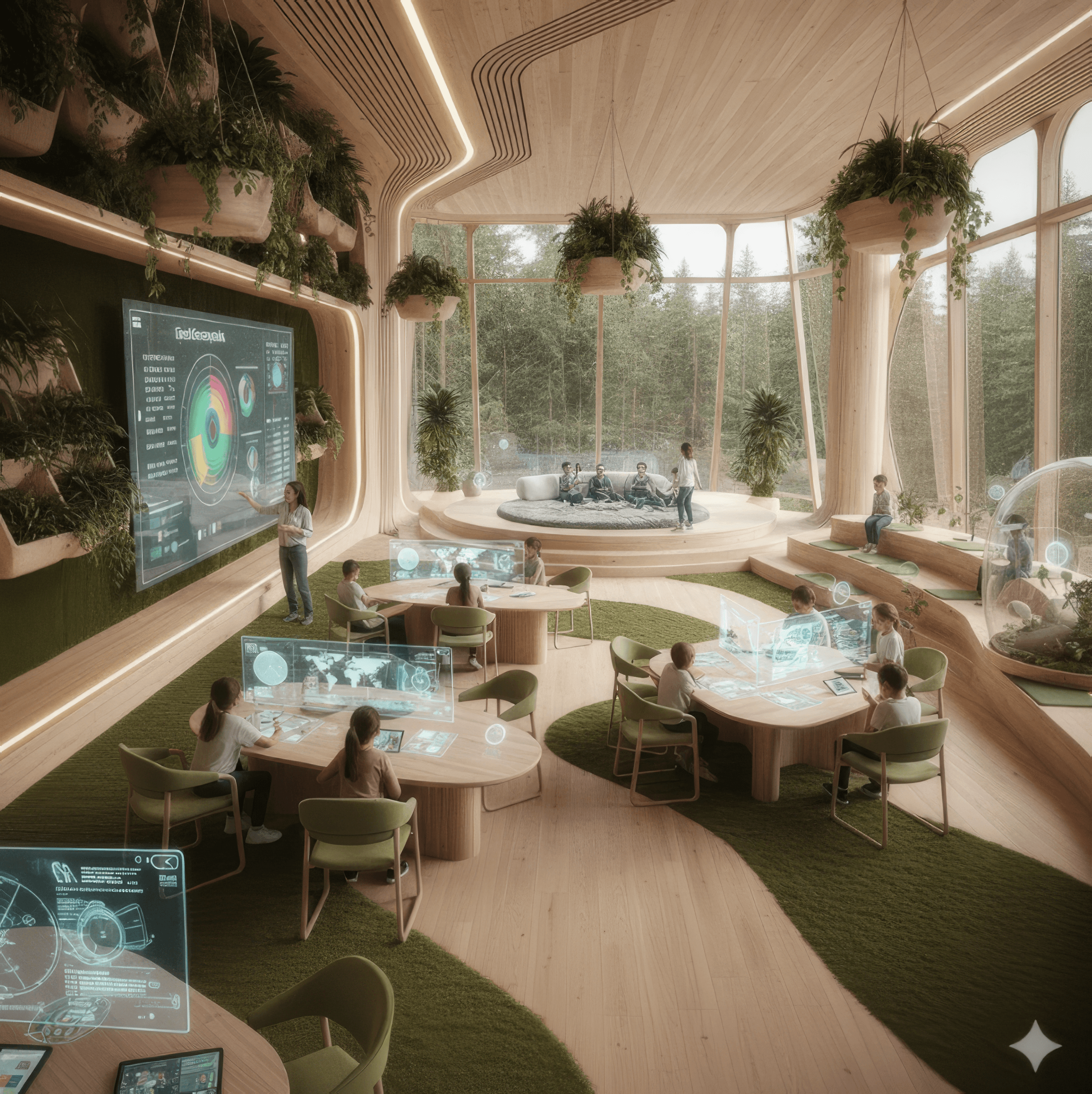
Our concept features a flexible, biophilic learning environment and an AI-powered learning companion that adapts to each student’s individual needs, rendering traditional homework unnecessary. Instead of conventional grading, we implemented a continuous feedback system using visual competency grids to track and support student progress.
The result is an immersive, collaborative, and student-centered model that redefines education for a more adaptive, engaging, and forward-thinking future.
Deliverables
3D Environment
Model Design
Research
Concept Development
Webseite
Industry
AI / Research
In cooperation with
Jonas Högerl, Nikolas Kittelberger
Location
Muc
Year
2024
Insight
A Vision for Tomorrow’s Learning
This project, developed in collaboration with two classmates, presents a holistic concept for the classroom of the future. Together, we reimagined the entire educational experience – from spatial design to pedagogical strategy.
Our concept features a flexible, biophilic learning environment and an AI-powered learning companion that adapts to each student’s individual needs, rendering traditional homework unnecessary. Instead of conventional grading, we implemented a continuous feedback system using visual competency grids to track and support student progress.
The result is an immersive, collaborative, and student-centered model that redefines education for a more adaptive, engaging, and forward-thinking future.
Deliverables
3D Environment
Model Design
Research
Concept Development
Industry
AI / Research
Location
Muc
Year
2024
Source reference (German)
Academic text
Concept for a Future-Oriented Classroom and Learning Model
The present concept outlines a visionary classroom model that integrates innovative learning atmospheres and teaching concepts. The objective is to create an environment that makes learning both effective and inspiring.
Spatial Design of the Classroom of the Future
The physical learning environment is considered an integral part of the pedagogical concept.
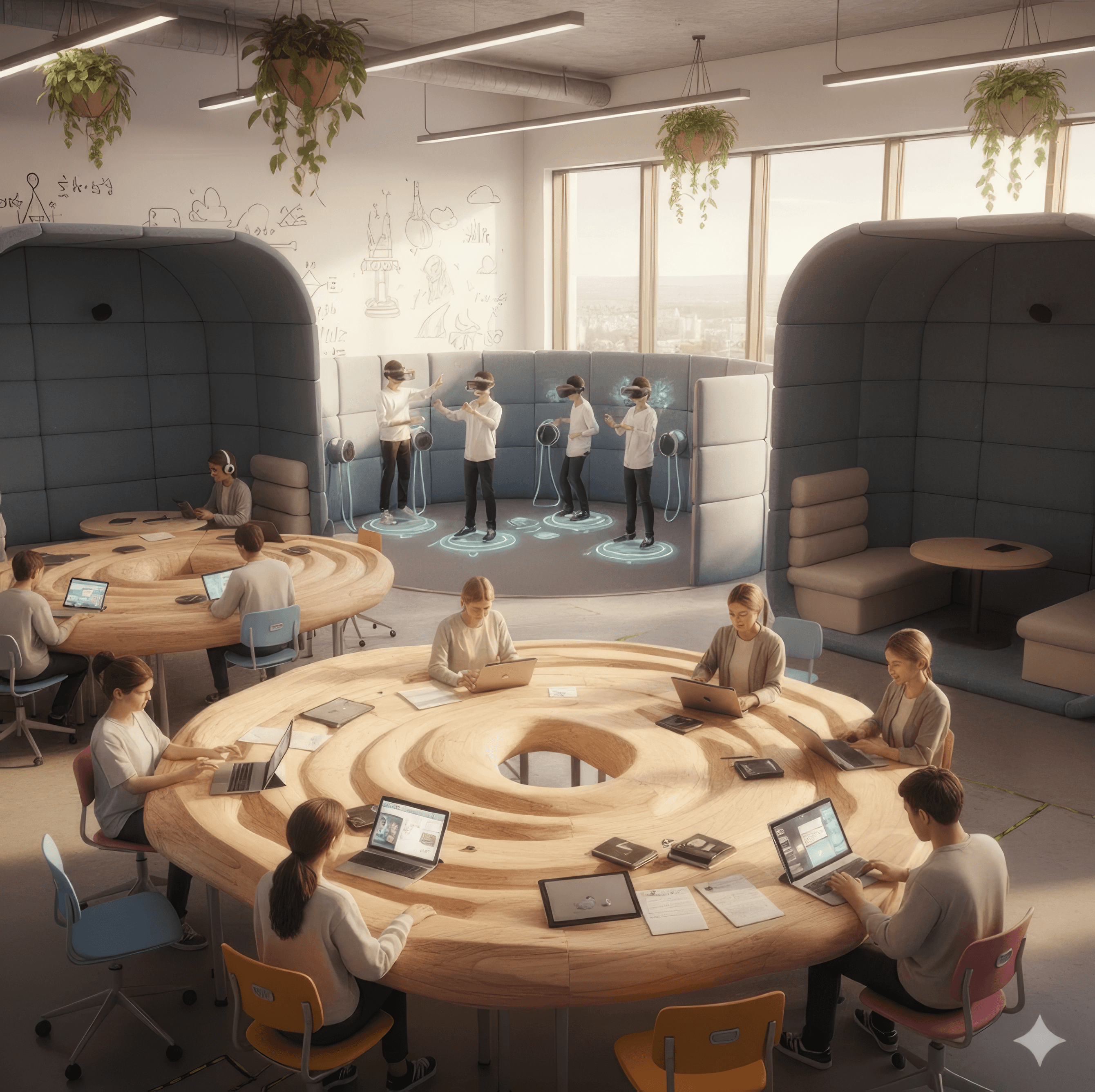
Decentralized and Biomorphic Structure: The traditional classroom layout is replaced by a decentralized structure with biomorphically designed group workstations for up to 20 learners. Research on class size suggests that smaller groups can have potentially positive effects on learning outcomes (Seattle Times, n.d., Deutschlandfunk, 2019). This open spatial design is intended to foster collaboration and flexibility for creative and intensive group work, supported by findings on classroom design (Edutopia, 2021a).
Presentation Area: A dedicated presentation area with rows of seats and a large whiteboard serves for the presentation of work results and knowledge sharing within the learning community.
Open Space for Virtual Reality (VR): A designated open space in the rear of the classroom allows for the use of Virtual Reality (VR) applications. This technology offers immersive learning experiences and innovative approaches to educational content (European Union, 2023).
Natural Light Exposure: Large floor-to-ceiling windows ensure optimal natural light exposure. Studies indicate positive effects of daylight on academic performance and well-being (Edutopia, 2021a). Adjustable frosted glass allows for the adaptation of lighting conditions and minimizes external distractions.
Nature-Connected Design: The use of numerous plants and a color palette of wood, beige, and grey tones creates a nature-connected and calming learning atmosphere. Elements of biophilic design can promote well-being and concentration (Edutopia, 2021a).
The AI Companion as an Individualized Learning Partner
A core element of the concept is an AI-based learning companion.
Personalization and Function: A personalized AI Companion acts as an individualized learning partner. It assumes the role of a playful mentor to convey knowledge in a motivating manner and to engage learners. The design of AI systems as supportive and engaging learning partners is a current field of research (CEUR-WS.org, Vol-3486, Paper 162, Deutsches Schulportal, 2023a, Stanford HAI, 2021).
Optimized Learning Time and Elimination of Homework: Fixed class times are used for working on individualized tasks supported by the AI (Deutsches Schulportal, 2023a, CEUR-WS.org, Vol-3486, Paper 162). The concept provides for the elimination of traditional homework, based on discussions about its effectiveness for learning success and the goal of promoting flexibility (SVZ, 2023).
Adaptive Support and Group Formation: The AI adaptively adjusts to the individual needs, strengths, and weaknesses of the learners. It also assists in the optimal formation of learning groups for projects by considering complementary skills to optimize collaborative learning (CEUR-WS.org, Vol-3486, Paper 162).
Structure of the Timetable and Learning Content
The organization of learning time and the selection of learning content are modernized.
Individualized Timetable Design: The AI Companion generates individualized weekly timetables that include subjects, group work phases, and discussion sessions. Such personalized learning paths are a key feature of AI-supported education systems (European Union, 2023, CEUR-WS.org, Vol-3486, Paper 162). Learning support is also available outside of regular class times, which enables self-directed learning.
Core Subjects and Future-Oriented Competencies: Following experts like Klaus Hurrelmann (Watson, 2023), the curriculum includes: Digital Literacy, Sustainability and Environmental Protection, Global Awareness and Intercultural Competencies, and Social Skills. Traditional subjects such as mathematics, sciences, and foreign languages remain as fundamental pillars.
Modified School Start Time: The start of the school day is moved to 10:00 AM. This measure takes into account findings on the chronobiology of adolescents and aims to improve readiness to learn by aligning with their natural sleep rhythm (Quarks, 2023).
Methods of Performance Assessment
The evaluation of learning progress is fundamentally reformed.
Shift Away from Traditional Test Formats: Traditional knowledge tests in the form of summative exams are omitted. Instead, the AI Companion evaluates the state of knowledge formatively through targeted, dialogue-based inquiries. These also incorporate previous topic areas to check and promote networked and sustainable understanding. Approaches from "Adaptive Testing" and "Intelligent Tutoring Systems" support this methodology (ScienceDirect, 2023, CEUR-WS.org, Vol-3486, Paper 162, bpb, 2015, Deutsches Schulportal, 2023a).
Alternative Forms of Assessment: Evidence of performance is primarily provided through the application and presentation of knowledge and skills, for example, in lectures, project documentation, and active participation in moderated discussions in interaction with tutors. This aligns with modern approaches to competency-based assessment formats (Deutsches Schulportal, 2023b).
Competency-Based Evaluation using a Spiderweb Diagram: Instead of a classic deficit-oriented grading system (Deutsches Schulportal, 2024), evaluation is carried out using a spiderweb diagram (competency grid). This visualizes individual strengths and areas for development in detail across various, curriculary-defined competency areas of the subjects. The goal is to provide differentiated, strength-oriented feedback for targeted competency development (bpb, 2015).
The presented model of performance assessment is based on modern pedagogical approaches that focus on individual, competency-based learning and the development of personal potential.
Quellen
Concept for a Future-Oriented Classroom and Learning Model
The present concept outlines a visionary classroom model that integrates innovative learning atmospheres and teaching concepts. The objective is to create an environment that makes learning both effective and inspiring.
Spatial Design of the Classroom of the Future
The physical learning environment is considered an integral part of the pedagogical concept.
Decentralized and Biomorphic Structure: The traditional classroom layout is replaced by a decentralized structure with biomorphically designed group workstations for up to 20 learners. Research on class size suggests that smaller groups can have potentially positive effects on learning outcomes (Seattle Times, n.d., Deutschlandfunk, 2019). This open spatial design is intended to foster collaboration and flexibility for creative and intensive group work, supported by findings on classroom design (Edutopia, 2021a).
Presentation Area: A dedicated presentation area with rows of seats and a large whiteboard serves for the presentation of work results and knowledge sharing within the learning community.
Open Space for Virtual Reality (VR): A designated open space in the rear of the classroom allows for the use of Virtual Reality (VR) applications. This technology offers immersive learning experiences and innovative approaches to educational content (European Union, 2023).
Natural Light Exposure: Large floor-to-ceiling windows ensure optimal natural light exposure. Studies indicate positive effects of daylight on academic performance and well-being (Edutopia, 2021a). Adjustable frosted glass allows for the adaptation of lighting conditions and minimizes external distractions.
Nature-Connected Design: The use of numerous plants and a color palette of wood, beige, and grey tones creates a nature-connected and calming learning atmosphere. Elements of biophilic design can promote well-being and concentration (Edutopia, 2021a).
The AI Companion as an Individualized Learning Partner
A core element of the concept is an AI-based learning companion.
Personalization and Function: A personalized AI Companion acts as an individualized learning partner. It assumes the role of a playful mentor to convey knowledge in a motivating manner and to engage learners. The design of AI systems as supportive and engaging learning partners is a current field of research (CEUR-WS.org, Vol-3486, Paper 162, Deutsches Schulportal, 2023a, Stanford HAI, 2021).
Optimized Learning Time and Elimination of Homework: Fixed class times are used for working on individualized tasks supported by the AI (Deutsches Schulportal, 2023a, CEUR-WS.org, Vol-3486, Paper 162). The concept provides for the elimination of traditional homework, based on discussions about its effectiveness for learning success and the goal of promoting flexibility (SVZ, 2023).
Adaptive Support and Group Formation: The AI adaptively adjusts to the individual needs, strengths, and weaknesses of the learners. It also assists in the optimal formation of learning groups for projects by considering complementary skills to optimize collaborative learning (CEUR-WS.org, Vol-3486, Paper 162).
Structure of the Timetable and Learning Content
The organization of learning time and the selection of learning content are modernized.
Individualized Timetable Design: The AI Companion generates individualized weekly timetables that include subjects, group work phases, and discussion sessions. Such personalized learning paths are a key feature of AI-supported education systems (European Union, 2023, CEUR-WS.org, Vol-3486, Paper 162). Learning support is also available outside of regular class times, which enables self-directed learning.
Core Subjects and Future-Oriented Competencies: Following experts like Klaus Hurrelmann (Watson, 2023), the curriculum includes: Digital Literacy, Sustainability and Environmental Protection, Global Awareness and Intercultural Competencies, and Social Skills. Traditional subjects such as mathematics, sciences, and foreign languages remain as fundamental pillars.
Modified School Start Time: The start of the school day is moved to 10:00 AM. This measure takes into account findings on the chronobiology of adolescents and aims to improve readiness to learn by aligning with their natural sleep rhythm (Quarks, 2023).
Methods of Performance Assessment
The evaluation of learning progress is fundamentally reformed.
Shift Away from Traditional Test Formats: Traditional knowledge tests in the form of summative exams are omitted. Instead, the AI Companion evaluates the state of knowledge formatively through targeted, dialogue-based inquiries. These also incorporate previous topic areas to check and promote networked and sustainable understanding. Approaches from "Adaptive Testing" and "Intelligent Tutoring Systems" support this methodology (ScienceDirect, 2023, CEUR-WS.org, Vol-3486, Paper 162, bpb, 2015, Deutsches Schulportal, 2023a).
Alternative Forms of Assessment: Evidence of performance is primarily provided through the application and presentation of knowledge and skills, for example, in lectures, project documentation, and active participation in moderated discussions in interaction with tutors. This aligns with modern approaches to competency-based assessment formats (Deutsches Schulportal, 2023b).
Competency-Based Evaluation using a Spiderweb Diagram: Instead of a classic deficit-oriented grading system (Deutsches Schulportal, 2024), evaluation is carried out using a spiderweb diagram (competency grid). This visualizes individual strengths and areas for development in detail across various, curriculary-defined competency areas of the subjects. The goal is to provide differentiated, strength-oriented feedback for targeted competency development (bpb, 2015).
The presented model of performance assessment is based on modern pedagogical approaches that focus on individual, competency-based learning and the development of personal potential.
Quellen
Would love to work with you! or ☕
Tim Kümmel
Student at HM Munich
Would love to work with you! or ☕
Tim Kümmel
Student at HM Munich